Amazon - Guided Shopping
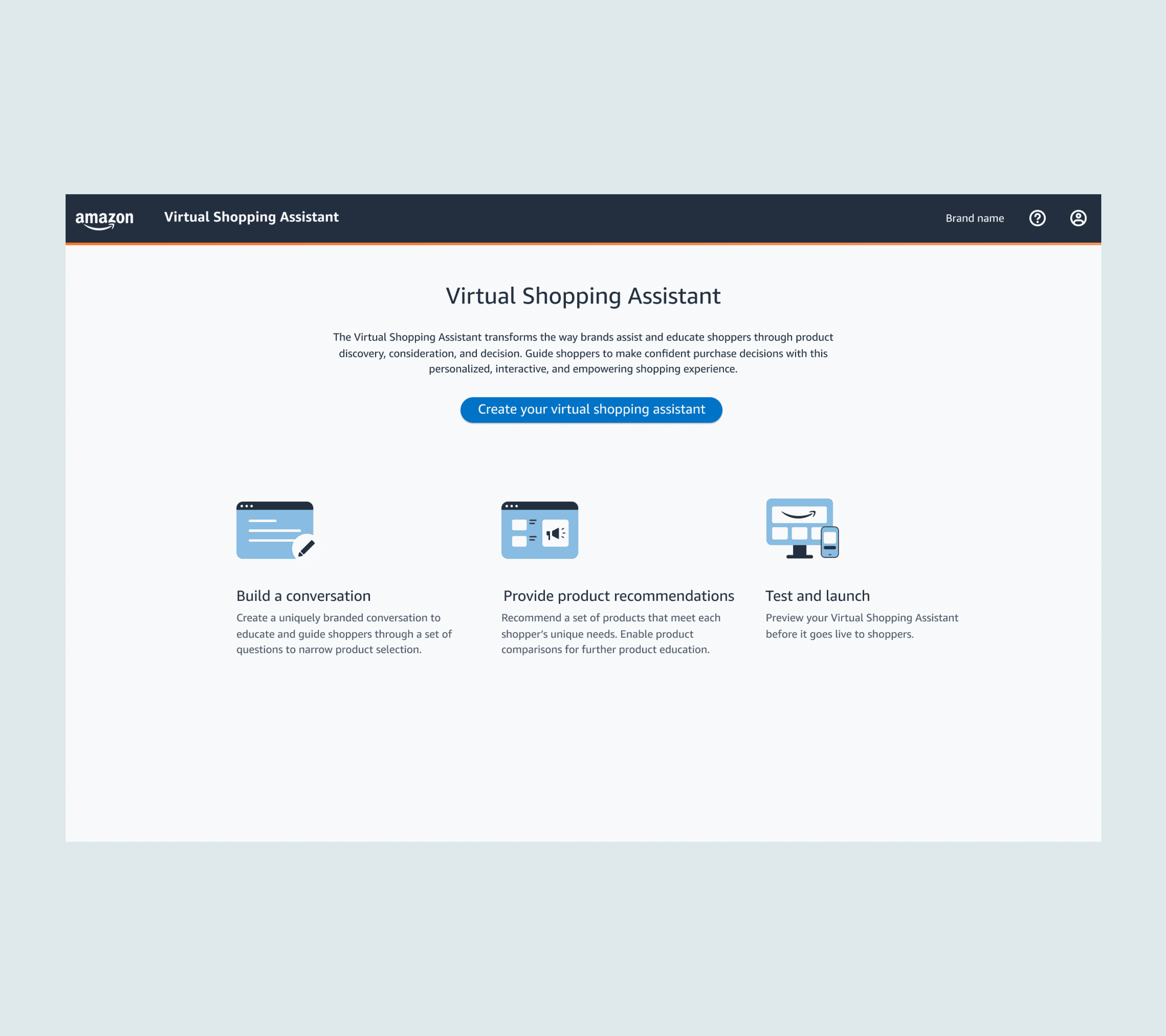
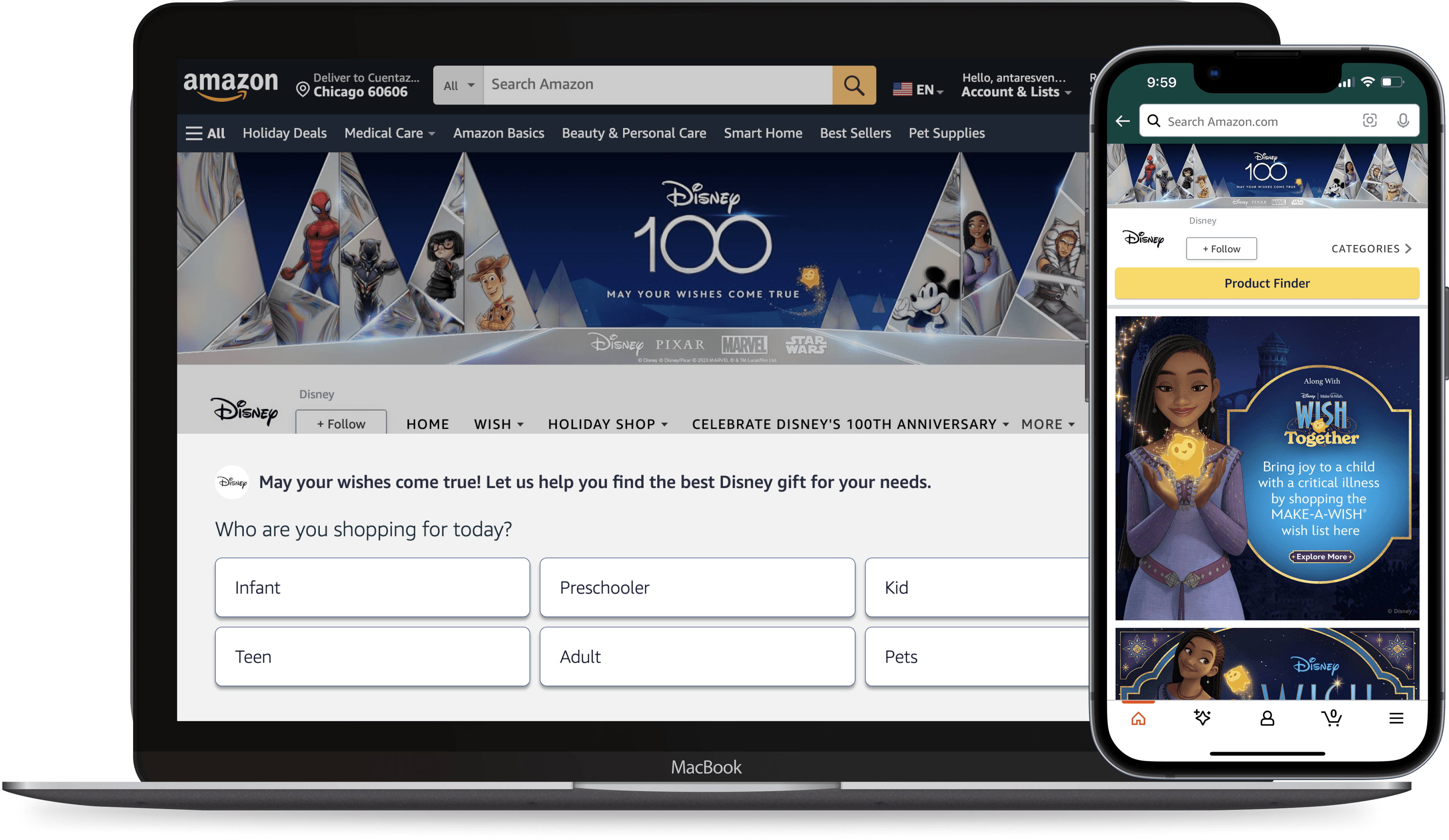
A generative AI shopping assistant and brand-management console that creates hyper-personalized B2C e-commerce experiences through intelligent product recommendations and dynamic content generation—driving a 25% uplift in average order value. Designed this 0-to-1 product from initial concept through market launch.
Role
Sr. UX Designer
Timeline
4 months
Platform
Web & Mobile
Project Overview
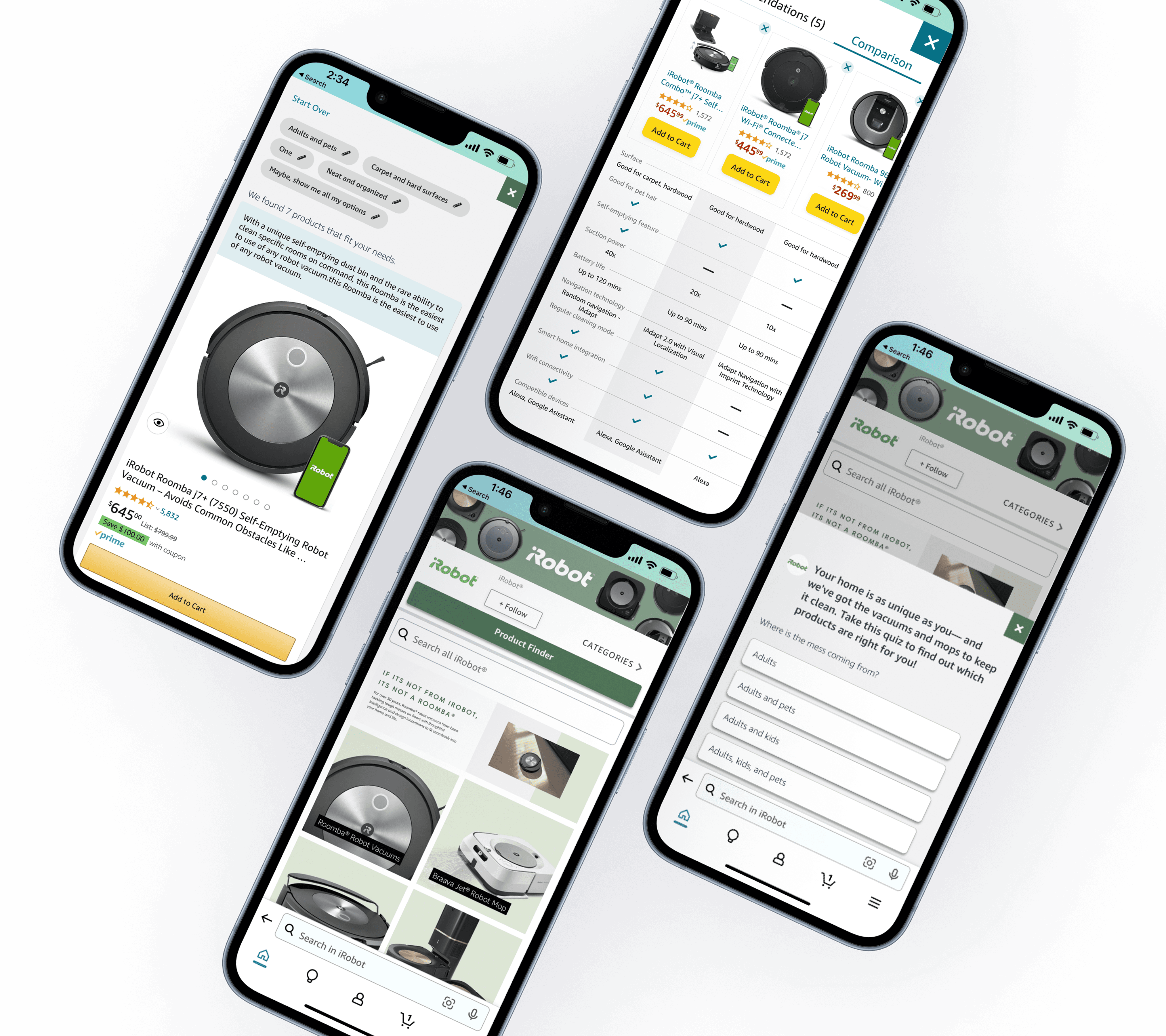
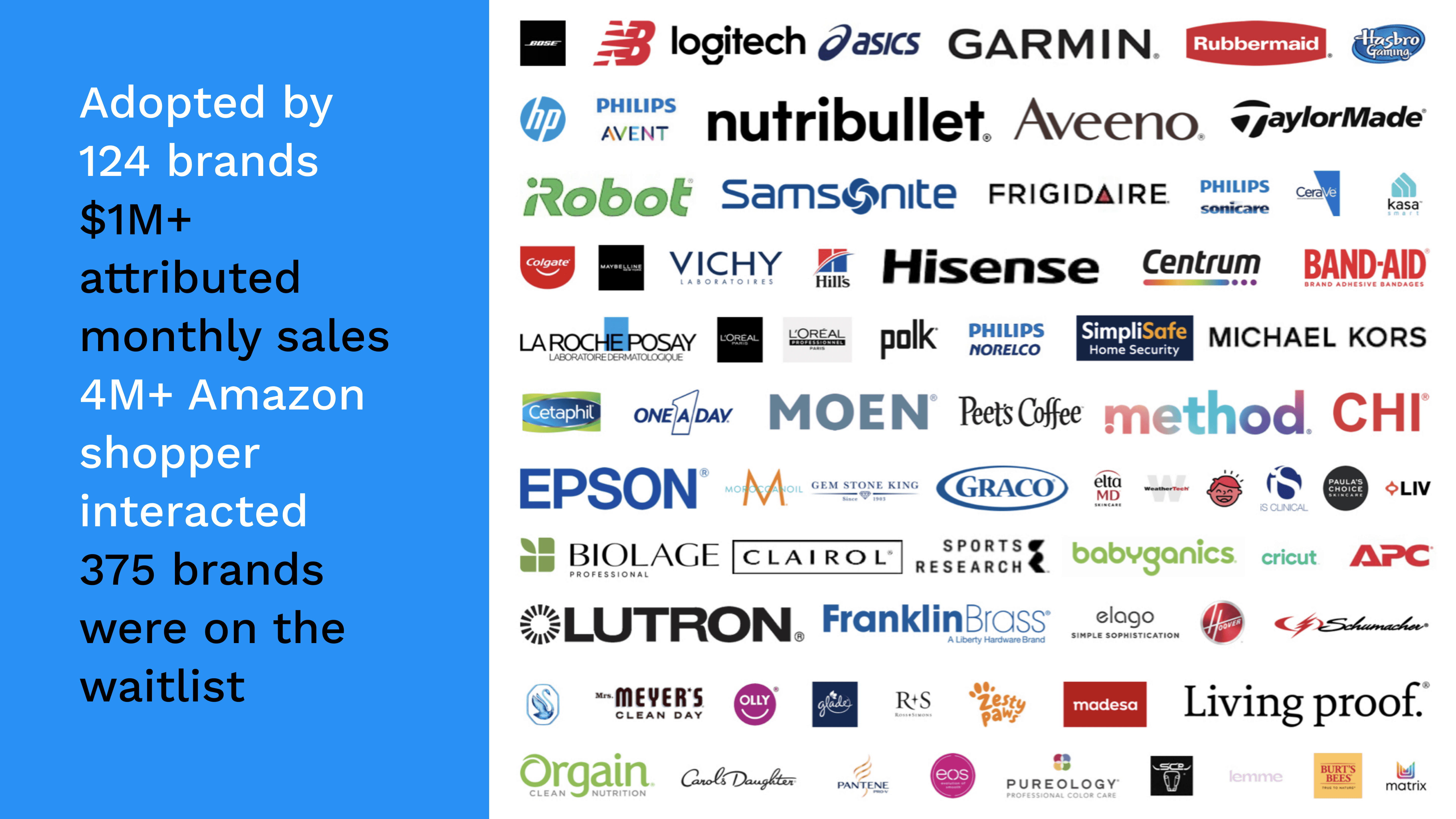
I led the end-to-end design of an AI-powered Guided Shopping Assistant for consumers and a complementary brand console serving 100+ e-commerce partners. By weaving together conversational prompts, context-aware product recommendations, and live performance dashboards, we drove over $1 million in incremental monthly sales.
My responsibilities spanned user research, low- and high-fidelity wireframes, and pixel-perfect prototypes—ensuring a cohesive, efficient experience across both mobile and web platforms.
Problem
Modern shoppers are paralyzed by choice overload and decision fatigue. Generic, one-size-fits-all recommendations make it difficult for users to zero in on items that truly fit their unique needs, undermining their confidence and elongating the path to purchase.
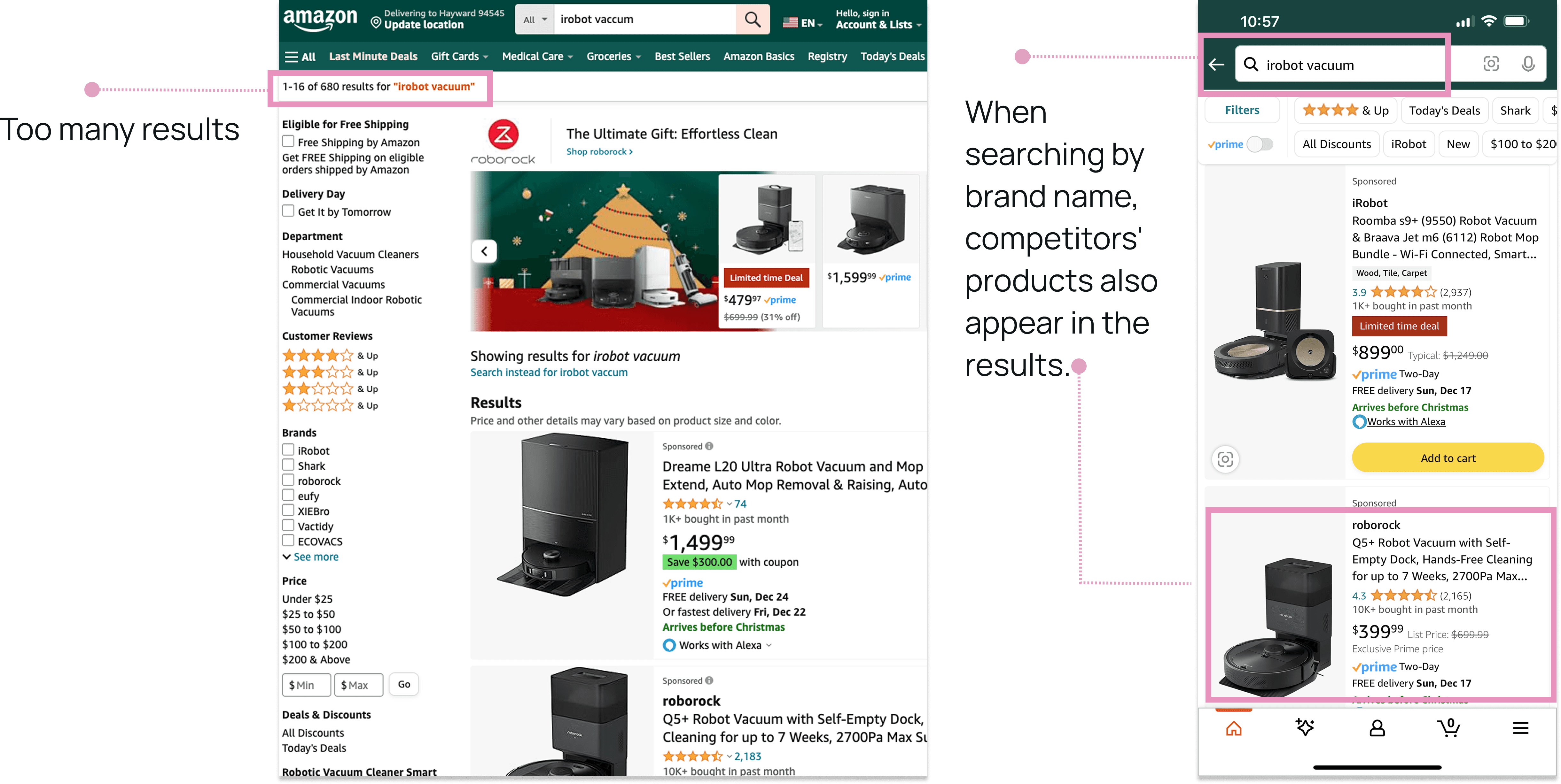
Goal
Accelerate discovery. Slash product research time by guiding users through tailored conversational flows.
Boost engagement. Surface highly relevant features and benefits to drive deeper product exploration.
Increase conversions. Deliver incremental revenue growth for partner brands by simplifying decision-making.
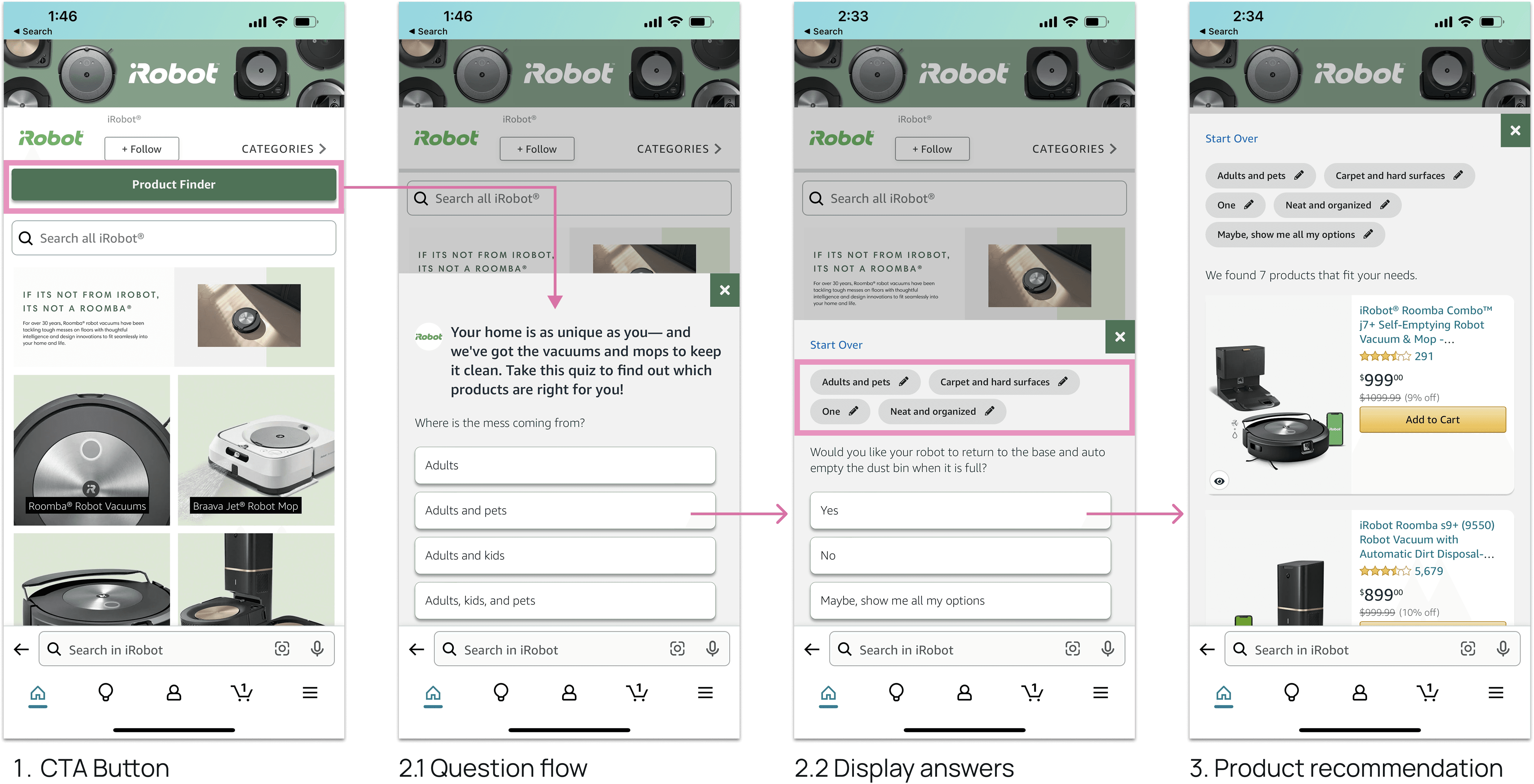
How V1 works…
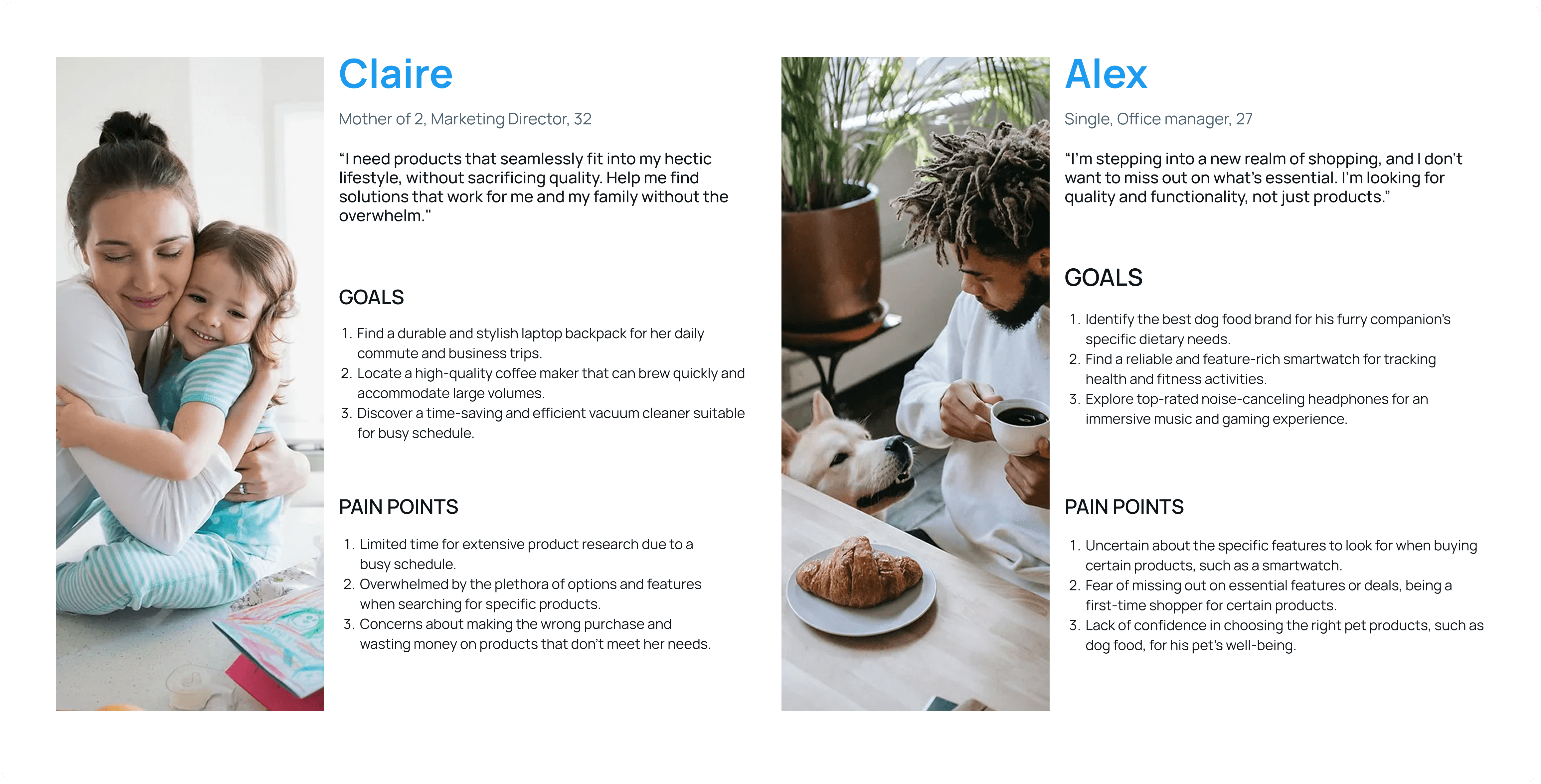
Personas
There are countless Amazon customer personas, but our initial focus will be on those who’ve demonstrated deep brand loyalty—individuals whose repeated purchases and long-term engagement reveal the most about sustained value drivers. By honing in on these high-loyalty segments uncovered through years of Amazon research insights, we’ll gain the richest understanding of what keeps customers coming back. This targeted approach ensures our UX efforts deliver maximum impact for both users and business goals.
Research
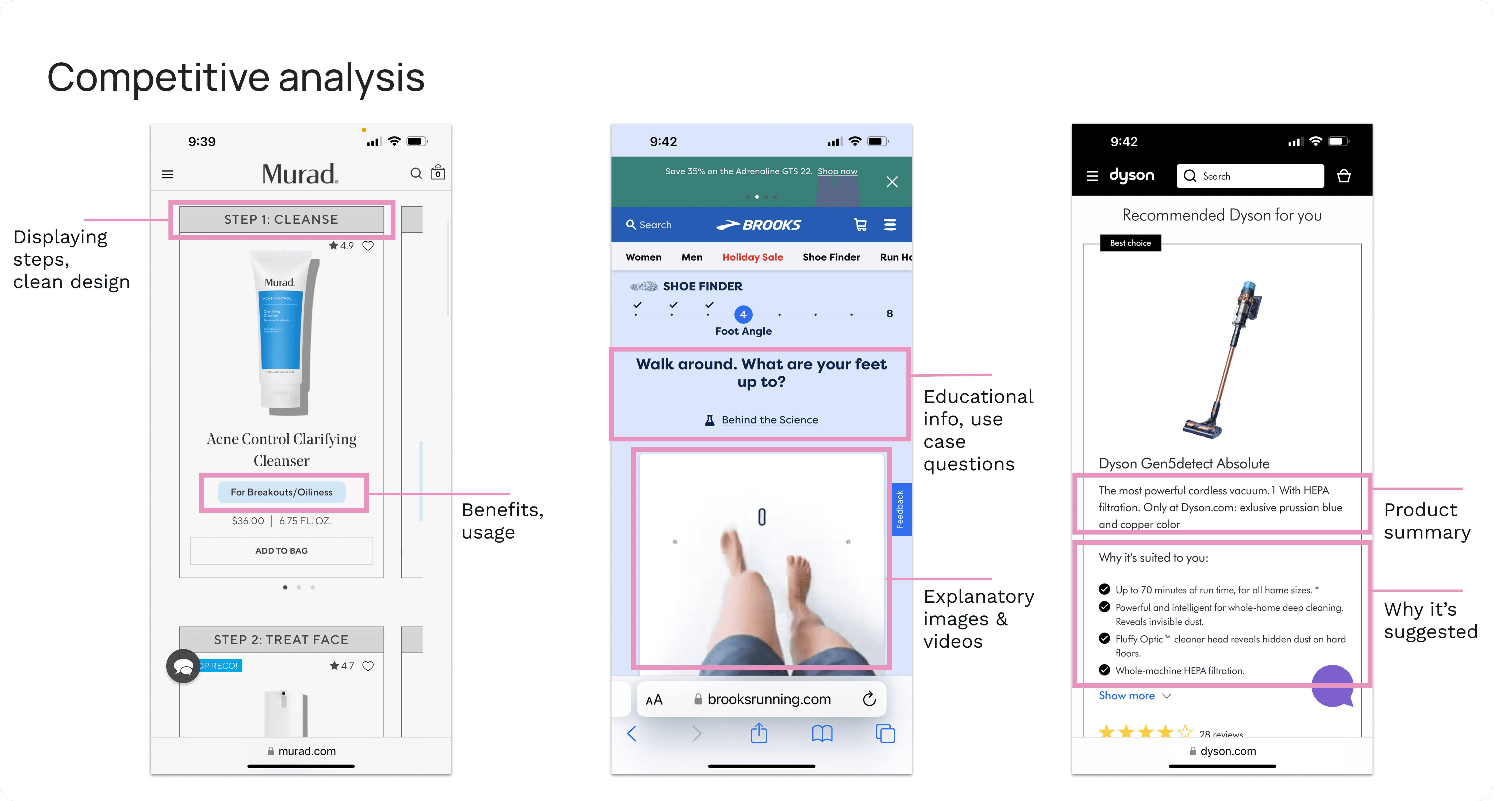
Competitive analysis
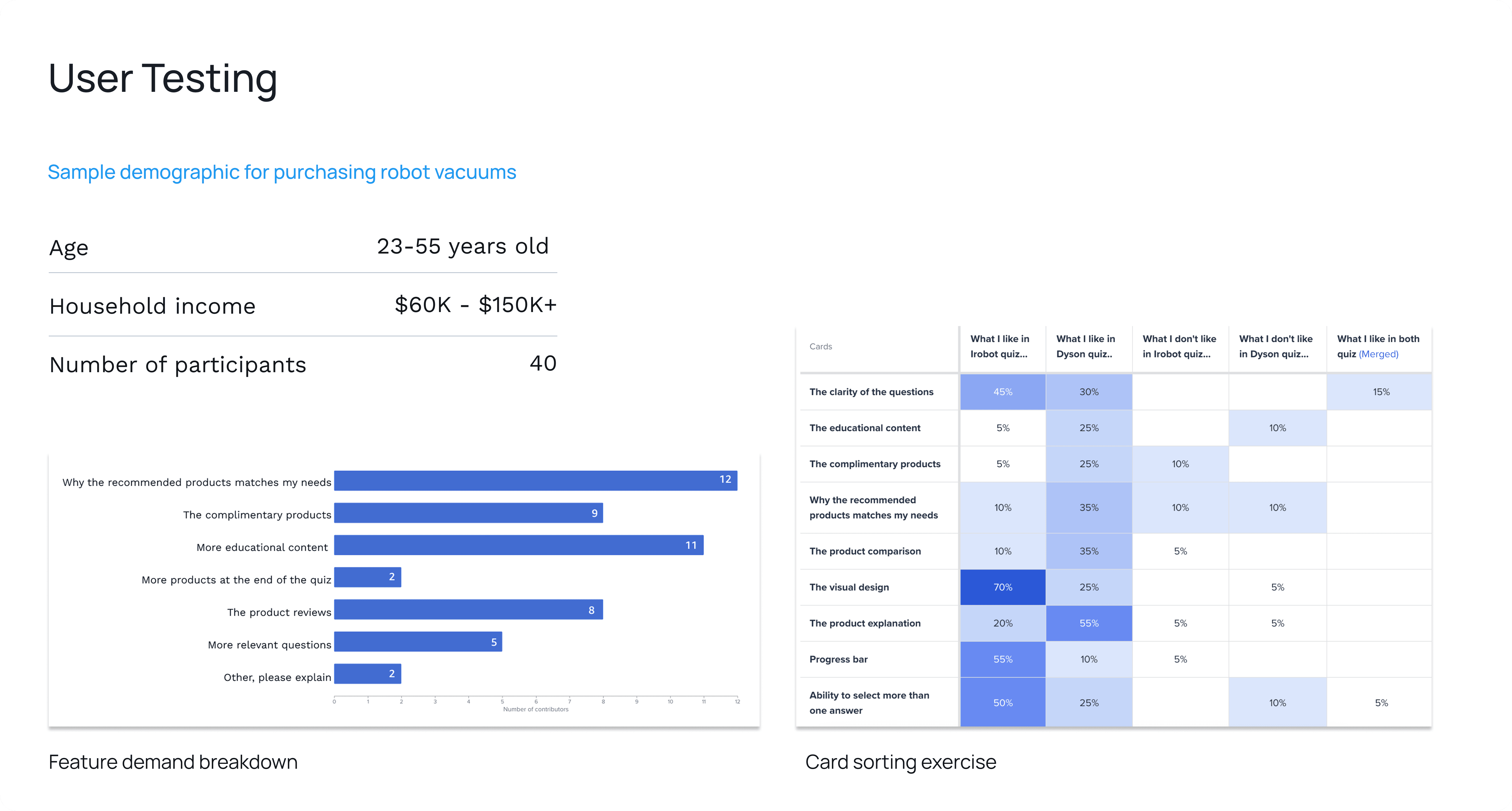
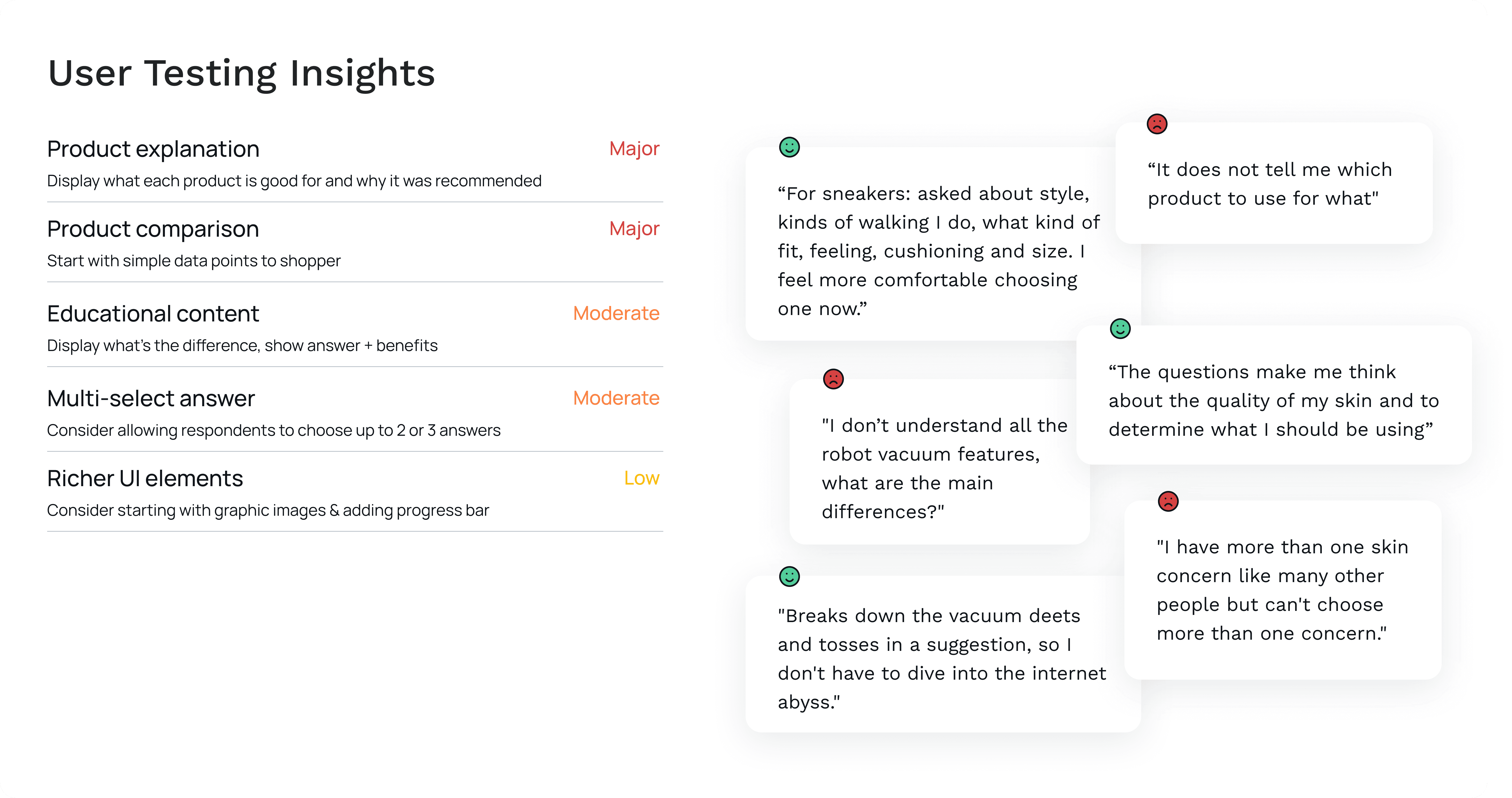
We carried out a benchmark study assessing shopper satisfaction across three key categories—skin care, footwear, and robot vacuums—to uncover best practices and pain points. The findings will directly inform how we personalize and optimize the Amazon shopping experience for our users.
Research Objectives
Identify competitor strengths and opportunities for improvement
Pinpoint the features shoppers love most
Uncover the features that frustrate or disappoint users
Compare expectations and satisfaction drivers across different product categories
Wireframe
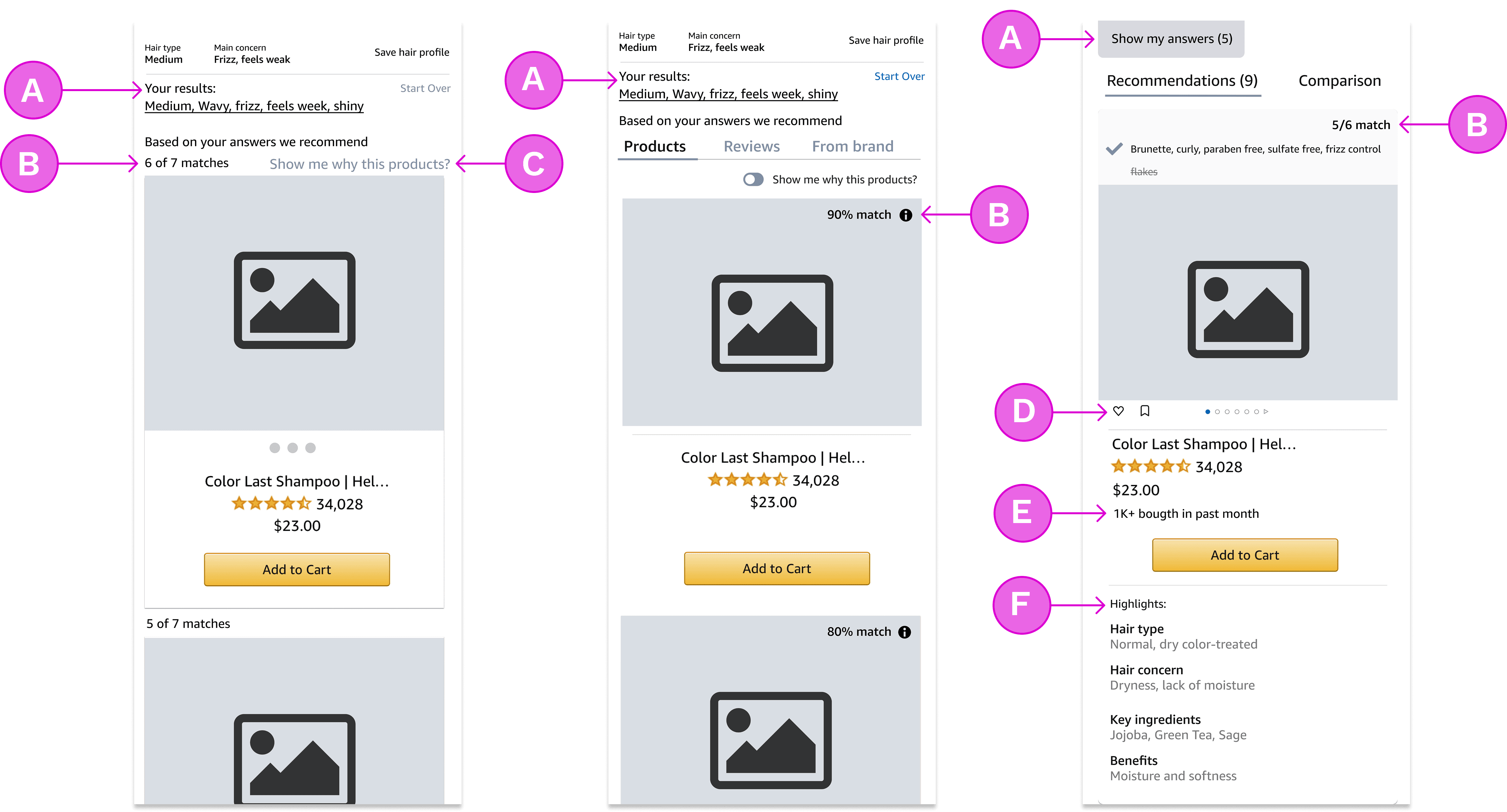
A. Answer pills/buttons
B. Match displays
C. Show why this product matches the shopper preference
D. Save product feature
E. Social proof
F. Differentiated features
Design Exploration
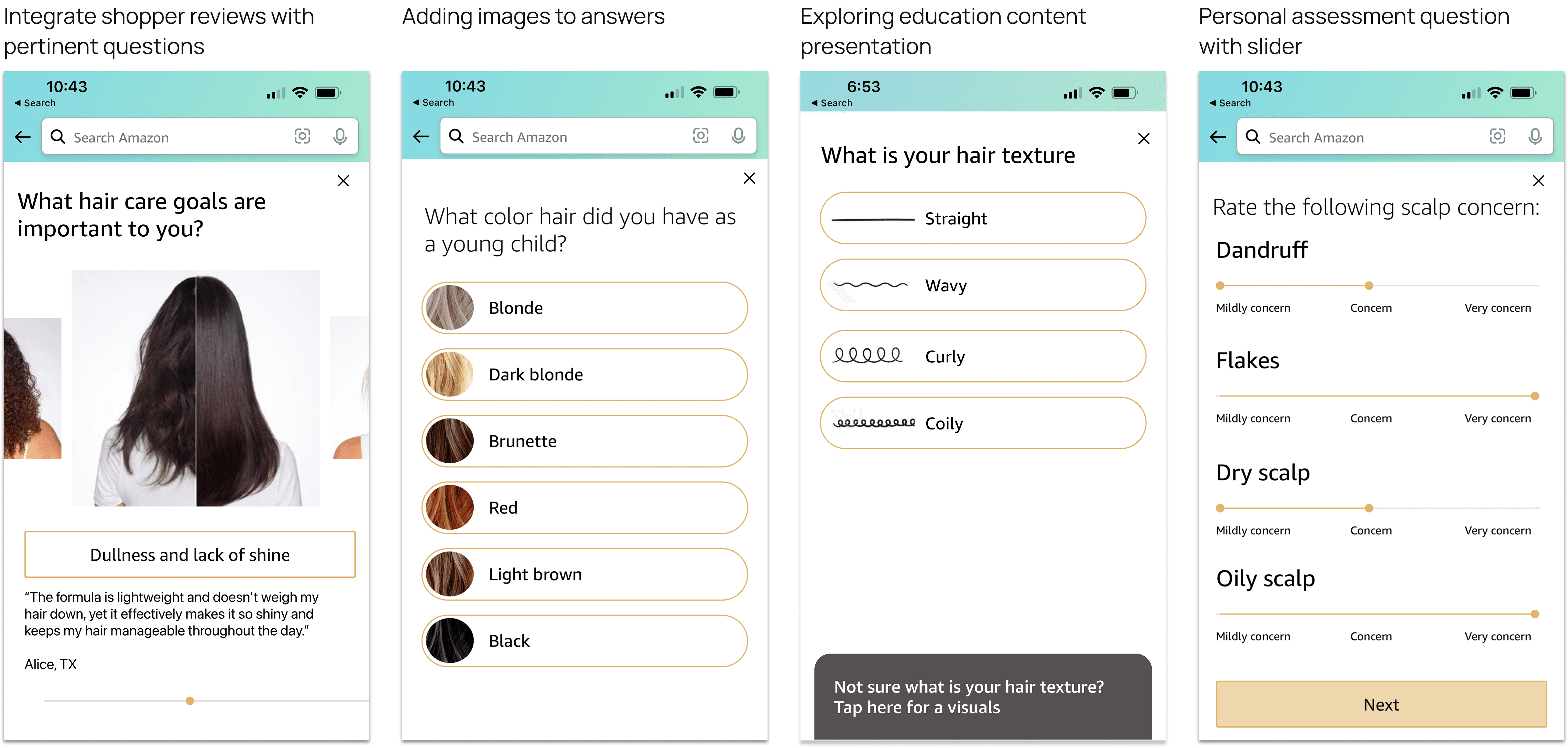
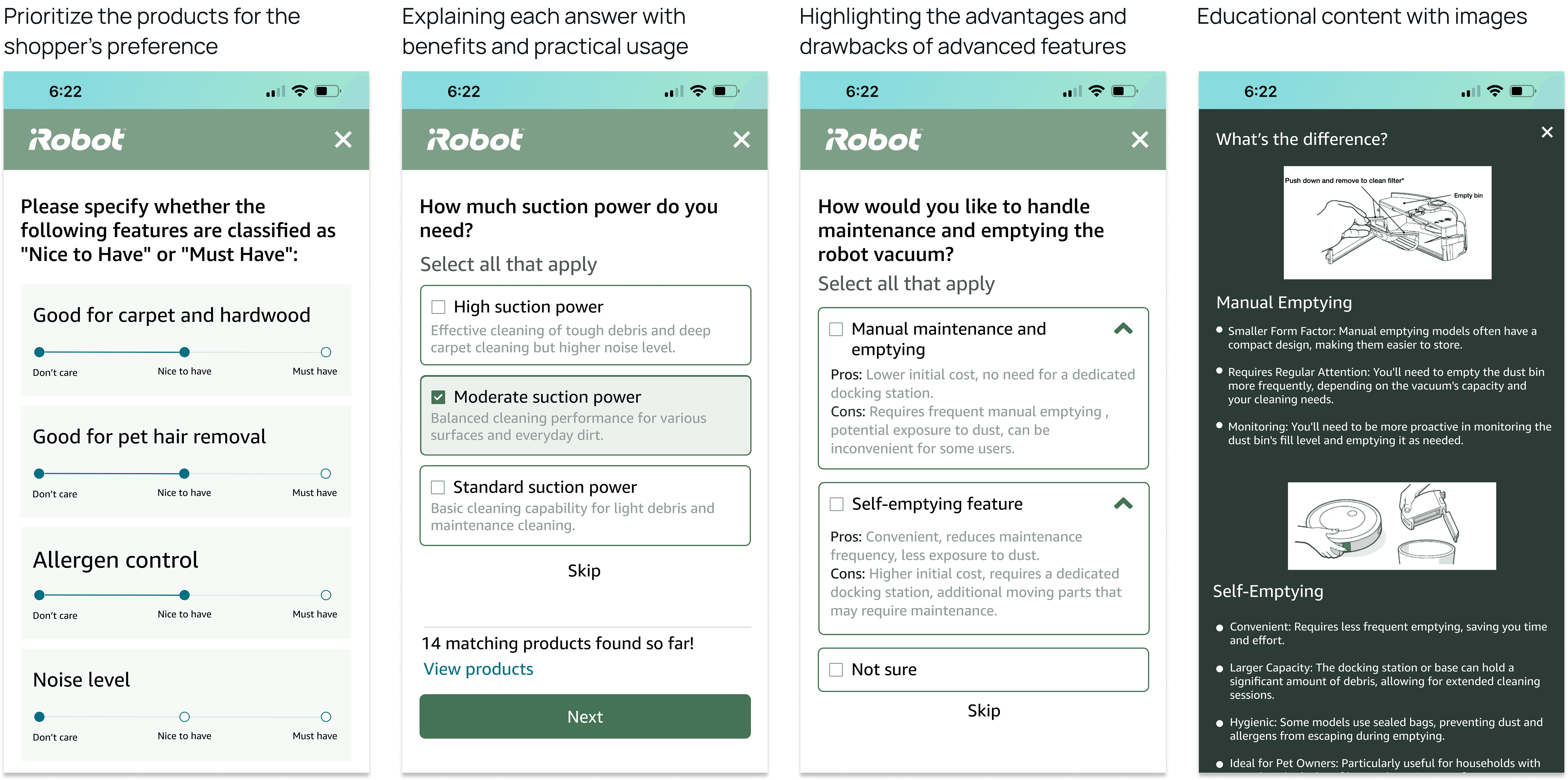
To validate different interaction models, I sketched and prototyped two distinct concepts—one emphasizing rich, image-led answer cards and another focusing on succinct, text-driven prompts:
Final Design
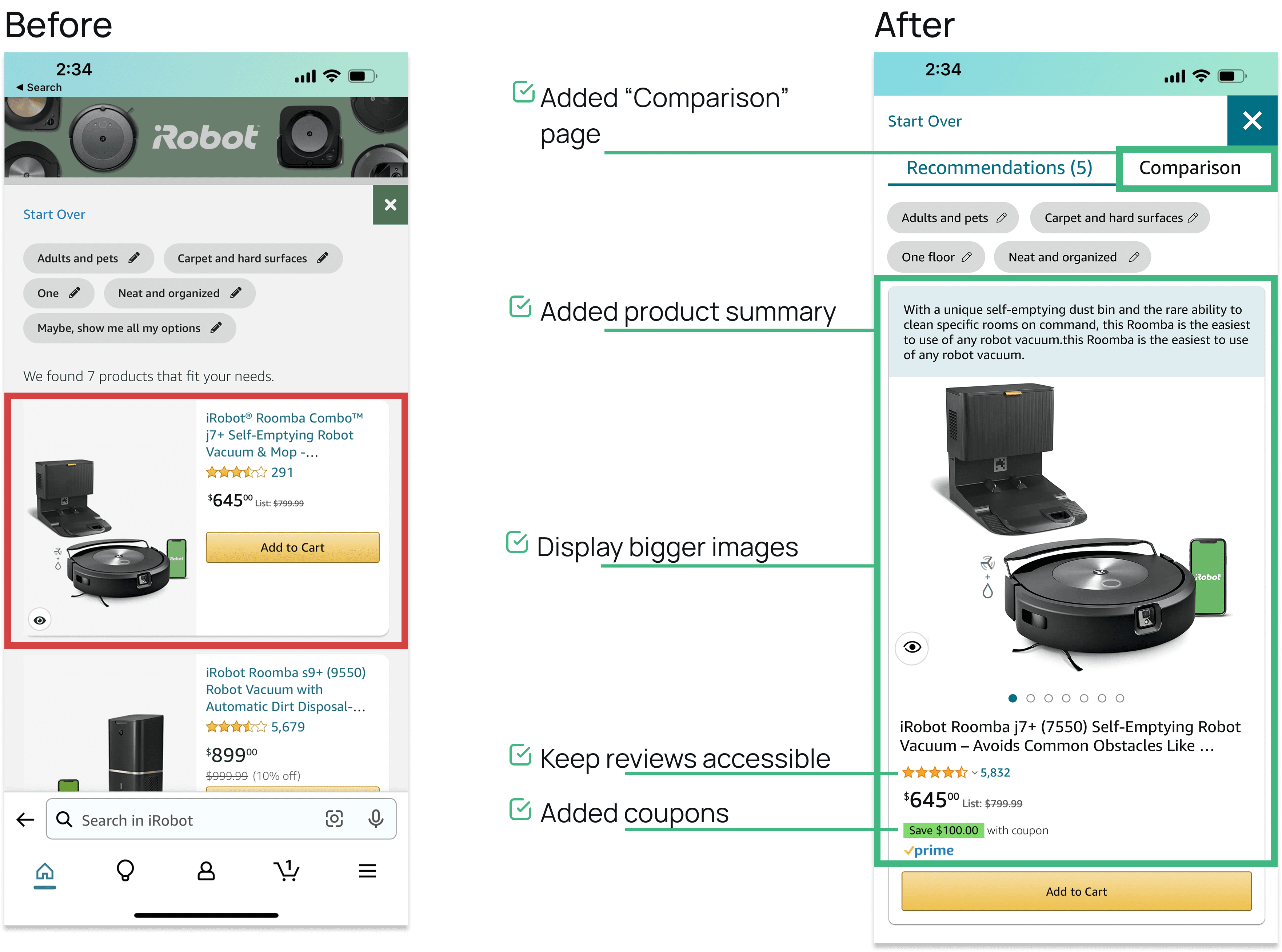
After user testing, we converged on a hybrid approach that balances compelling visuals with concise guidance. The final interface features:
Comparison view: Side-by-side product summaries with key specs and user reviews
Bigger imagery: High-resolution thumbnails for instant recognition
Accessible reviews: Expandable critique panels right next to product cards
Promotional cues: Contextual coupons and upsell indicators embedded in the flow
Results
Product engagement climbed from 36.8% → 50%
Sales impact increased by 10%

Learnings
Prioritize a robust e-commerce user experience based on shoppers' goals.
Maintain proactive communication with engineering teams for timeline alignment.
Improve customer interviews with open-ended questions to uncover valuable insights and new feature requests.
Go Back